ServicesCommercial Roofing
Commercial Roofing in Sachse, TX
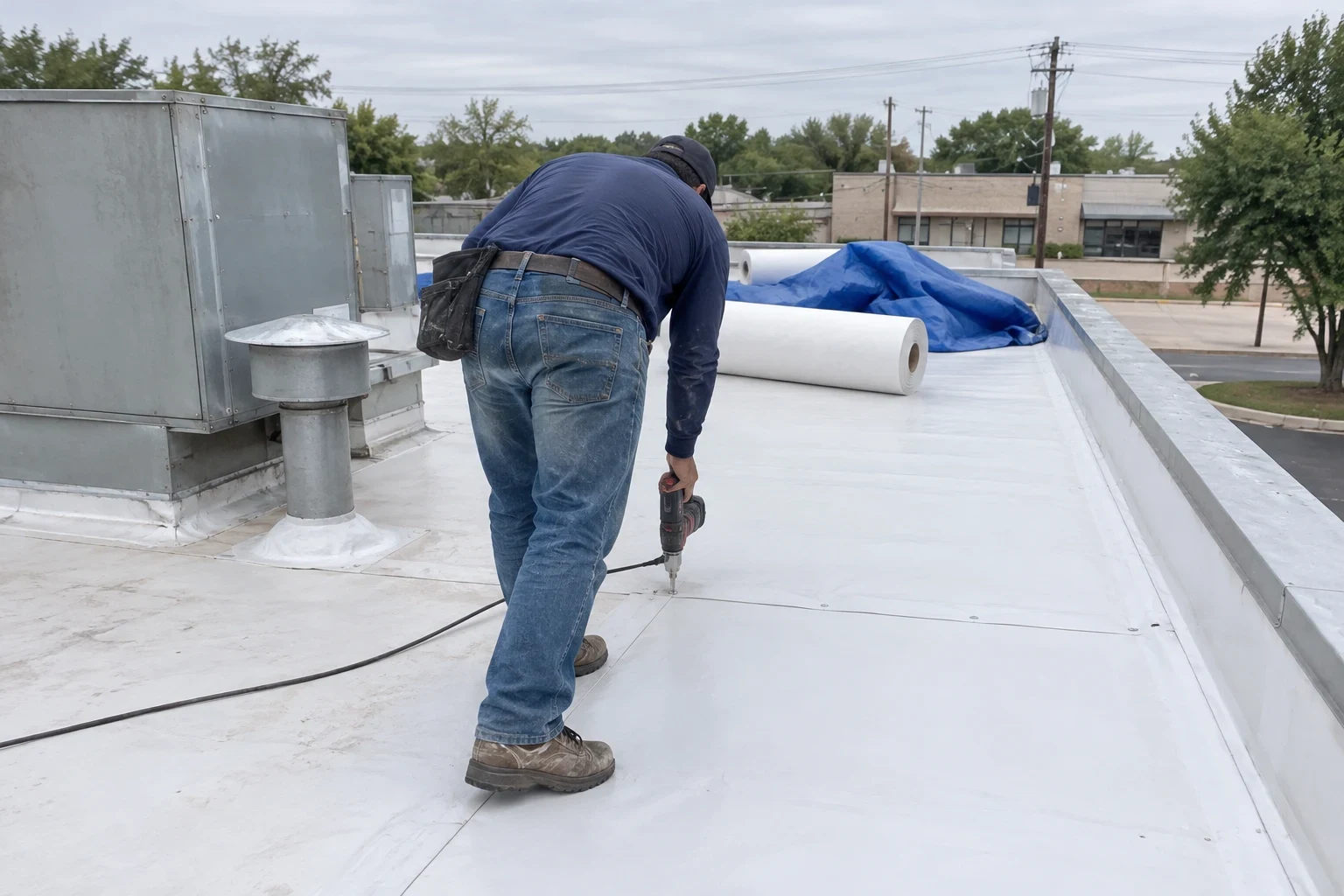
We put roofs on shops, offices and small commercial buildings, mostly flat and low-slope. Before you pick a system, we walk you through TPO, EPDM, modified bitumen, metal and coatings: what each costs to own and how each holds up. Then you get a free written estimate.
The right membrane for the building you have
A commercial roof is mostly about water. Flat and low-slope roofs don't shed rain the way a steep roof does, so the membrane, the seams and the drainage all have to work together. We're licensed and have 10 years of experience, and most of what we've learned comes down to matching the roof system to the building.
TPO is white, reflects summer sun and gets heat-welded at the seams. EPDM is black rubber that stays flexible for a long time but runs hot. Modified bitumen goes down in layers and stands up well to foot traffic around rooftop equipment. Standing seam metal costs more up front and can last for decades. A coating can add years to a sound roof without a tear-off.
We lay those options side by side, tell you which ones fit your building and budget, and let you make the call. No one-size answer, and no pushing the most expensive system.
What the work covers
- 01
Membrane systems
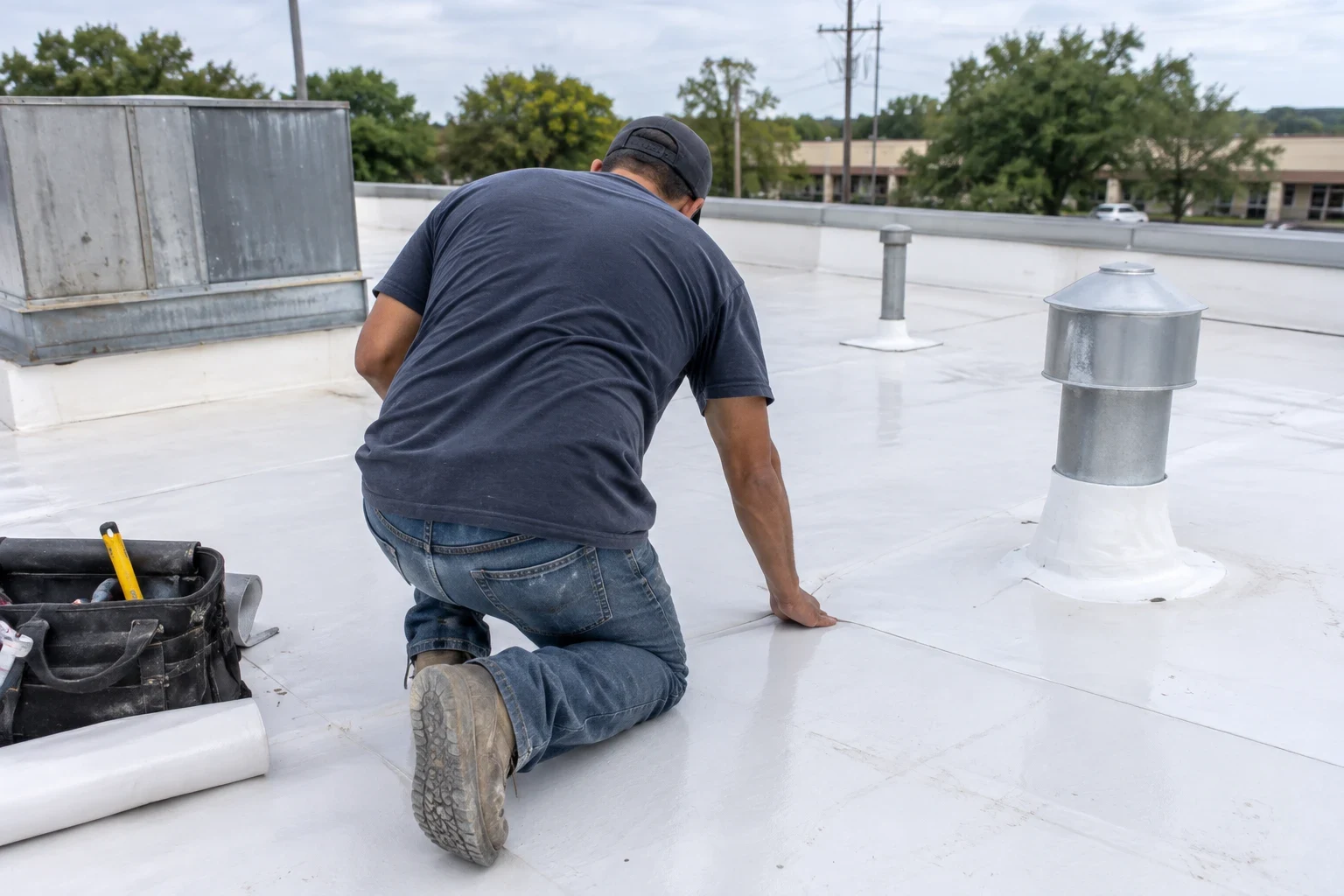
We install TPO, EPDM and modified bitumen on flat and low-slope roofs. Each gets fastened or adhered the way the manufacturer calls for, with seams welded or sealed and checked as we go.
- 02
Insulation and cover board
Tapered insulation gives a flat roof the slight pitch it needs to move water toward the drains. A cover board on top protects the insulation from foot traffic and hail.
- 03
Flashing and penetrations
Most leaks start where something pokes through the roof: HVAC curbs, vent pipes, skylights and parapet walls. We flash every one of these by hand and give them the most attention on the job.
- 04
Drains, scuppers and crickets
We make sure water has a clear path off the roof. Crickets behind rooftop units keep water from sitting on the high side of the curb.
- 05
Roof coatings
Silicone and acrylic coatings can go over a membrane or metal roof that is still dry and sound underneath. They reflect heat and seal small cracks. If the insulation below is wet, we'll tell you a coating is the wrong fix.
- 06
Permit and cleanup
We pull the permit where the city requires one and clean the site every day, including the parking lot and walkways your customers use.
Questions about Commercial Roofing?
Call(972) 703-4315Signs your commercial roof is due for work
Water still standing two days later
Some puddling right after rain is normal. Ponds that last 48 hours or more break down the membrane and add weight the deck wasn't built for.
Seams lifting or blisters forming
Open seams let water run under the membrane. Blisters often mean trapped moisture, and they tend to grow and split.
Stained ceiling tiles
Brown rings on drop ceilings usually show up well after water has been getting in. By then the insulation may already be soaked.
Cracked flashing at rooftop units
Equipment vibrates, metal moves with the heat and sealant dries out. Gaps around curbs and pipes are a common entry point.
Cooling bills that keep climbing
A dark roof soaking up a North Texas summer makes the AC work harder. A reflective membrane or coating can cut that heat load.
How a commercial roofing job runs
- 1
We walk the roof with you
We look at the membrane, seams, flashing and drains, and ask how the building gets used. If needed we take a small core sample to see what's under the surface.
- 2
You get options in writing
Your free estimate lists the roof systems side by side, with line items and what each one means for lifespan and upkeep. You can take your time deciding.
- 3
We schedule around your business
We plan the work so your doors stay open where possible, and we handle the permit. Noisy or messy steps can go early or on quieter days.
- 4
Install, clean up and walk through
We finish one section at a time so the building stays dry each night. When we're done we walk the roof with you and go over the warranty paperwork.
What moves the price
Every commercial roof is priced on its own. The material is a big part of it, but what's already up there and how hard it is to reach matter just as much. We explain each line on the estimate so nothing comes as a surprise later.
- Size and penetrations
- Square footage sets the base. A roof with a dozen units, pipes and skylights takes far more flashing work than an open one of the same size.
- Material choice
- Coatings usually cost the least up front, membranes sit in the middle and standing seam metal costs the most. The cheaper option isn't always cheaper over twenty years.
- What's underneath
- Wet insulation or a damaged deck has to come out before anything new goes down. Core samples tell us this before we price the job.
- Tear-off or overlay
- Code limits how many roof layers a building can carry. If there are already two, the old roofing has to come off, which adds labor and disposal.
- Access and scheduling
- Tall buildings, tight lots and work outside normal hours all add time. We'll tell you up front if any of these apply.
What building owners ask about their roofs
How do I know which roof system suits my building?
We look at the slope, how much foot traffic the roof gets and how long you expect to own the building. TPO is a frequent choice since its white surface reflects sunlight and its seams are heat-welded. Modified bitumen handles traffic near rooftop units better, and metal makes sense on a building you'll hold for many years. We trim the list and tell you why.
Could a coating take the place of a full tear-off?
In some cases. A coating only makes sense on a roof that is dry and largely sound. If core samples find wet insulation, a coating would lock that water in, and we'll tell you so directly.
Do we need to shut down during the work?
In most cases, no. We take the roof one section at a time, leave the building dry every evening and plan noisy work around your hours. You see the schedule before we begin.
Is commercial roof work covered by a warranty?
Eligible projects get our workmanship warranty, and coverage depends on the service. Your estimate spells out the terms for your roof. Any manufacturer warranty on the membrane or panels is separate from ours.
Do you charge for an estimate?
No. We go up, check what's there and list your options line by line. The visit costs nothing, and you don't have to hire us afterward.
Let's look at your roof together
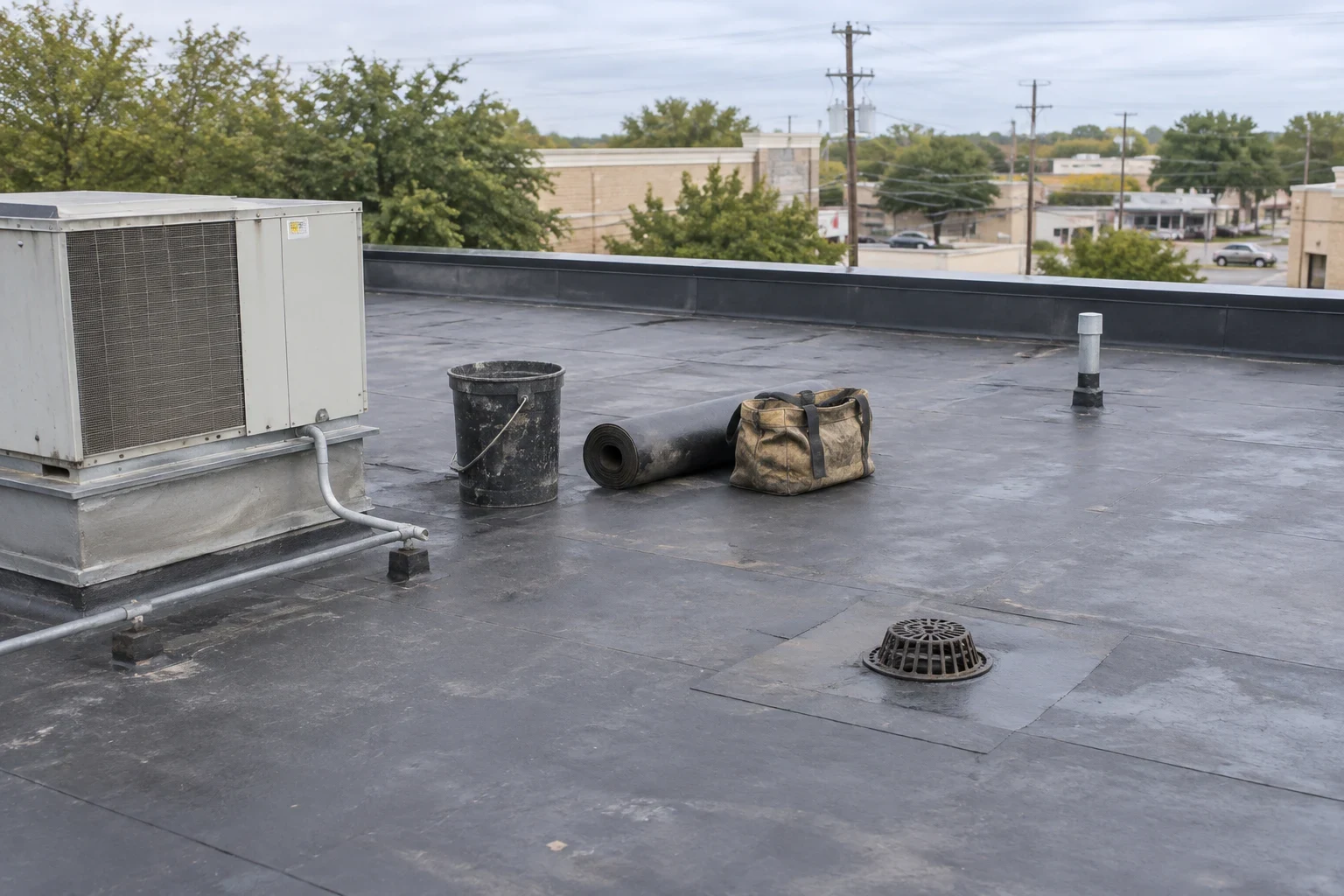
We'll walk the roof, show you what we find and lay out your options in writing. One phone call gets it on the schedule.